Grinding Noise When Braking: What to Check Before You Keep Driving
It starts at one stop sign: a rough, metal-on-metal scrape every time you press the pedal. A grinding noise when braking is your brake system past its warning stage — the squeal that comes first is the early alert, and grinding is what happens after it gets ignored or the pads wear out. This guide walks through what to check, in order, before you decide whether the car moves again today. AI Mechanic ranks causes from a described or recorded noise; here are the signs that mean stop, not drive.
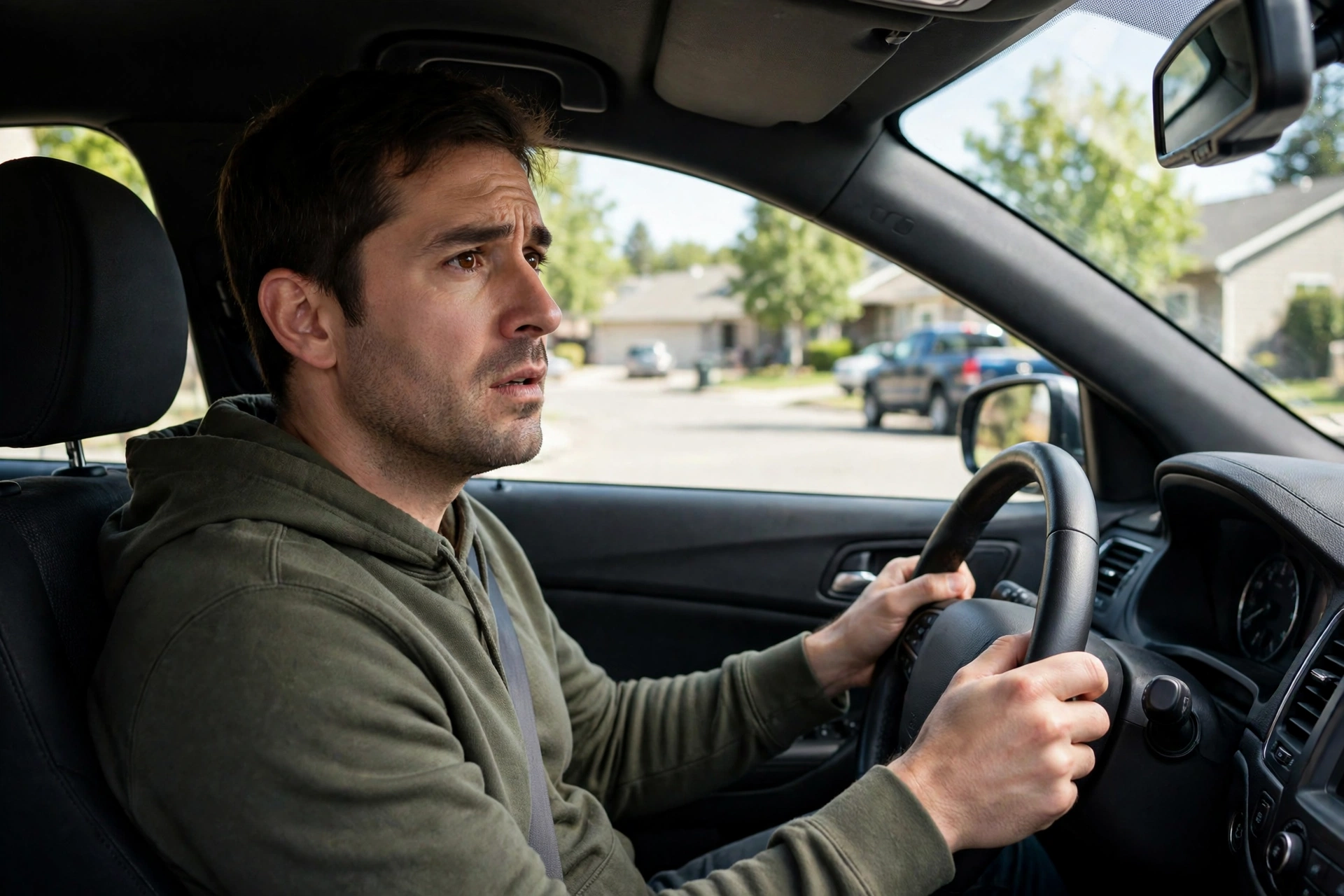
First: the three checks that decide if you drive at all
Before any diagnosis, answer these three questions. Any one bad answer ends the trip.
1. How does the pedal feel? Press it with the car parked and running. A pedal that sinks, feels soft or spongy, or travels much farther than usual points to a hydraulic problem — low fluid, air in the lines, or a leak. That is not a noise problem anymore. Do not drive; arrange a tow.
2. Is a brake warning light on? A red brake warning light on the dash, or a pedal that pulses hard with grinding, means the system is telling you something is wrong beyond worn pads. Treat it the same way: park it and get it towed or inspected where it sits.
3. Is the car still stopping normally? If stopping distance has grown, the car pulls to one side under braking, or the grinding comes with vibration through the pedal or steering wheel, every extra mile is wearing metal and lengthening your stops. A short, slow trip to a nearby shop may be reasonable for plain pad wear with a firm pedal and no warning light — grinding plus any of these symptoms is not that case.
What a grinding noise when braking usually means
With a firm pedal, no warning light, and normal stopping, work through the likely causes in this order:
1. Brake pads worn down to the backing plate. This is the most common cause. Pads are a wear item: the friction material thins over time, most pads carry a small metal tab that squeals as an early warning, and once the material is gone the steel backing plate grinds directly on the rotor. At that point the rotor is being scored too, which is why waiting turns a pads-only job into pads plus rotors.
2. Rust or debris after the car sat. A car parked outside for days, especially after rain, builds a thin rust layer on the rotors. The first few stops can sound rough and then clear. A small stone caught between pad and rotor can also screech or grind until it works loose. The tell: this kind of noise fades within a few stops. Grinding that stays, stop after stop and day after day, is not surface rust.
3. A stuck caliper or uneven wear. A caliper that does not release fully drags one pad against the rotor constantly. Clues are grinding or dragging from one wheel, the car pulling slightly, or one wheel noticeably hotter than the others after a drive. This wears one pad fast while the others still have life, so "the pads were fine last year" does not rule it out.
4. A worn wheel bearing — the impostor. Bearings growl or grind with speed and often change tone when you turn or shift the car's weight side to side, whether or not you are braking. If the noise is there at steady speed with your foot off the brake, put the bearing on the list alongside the brakes.
A worked example: describing the noise before you spend anything
Here is what the check looks like in practice. A driver hears grinding from the front at every stop, pedal firm, no warning light, car stopping straight. Before booking anything, they open the diagnosis page and describe it in plain words: when it happens (only under braking), where it seems to come from (front left), and what changed recently (the car sat for two weeks, then the noise started and did not fade).
That detail separates the causes above. Noise only under braking, from one corner, that persists points at that corner's pads first; the worked answer ranks worn pads at that wheel ahead of a bearing, and flags what would change the ranking — pedal feel, warning lights, noise at speed without braking. With a free account, you can also record the noise itself: the site states guest diagnosis is text-only and sound recording comes with a free account, and the free plan includes 200 tokens a month — about 40 text questions or about 13 photo or sound analyses, no card required. Your first diagnosis needs no account at all: 1 free diagnosis, text description, no sign-up.
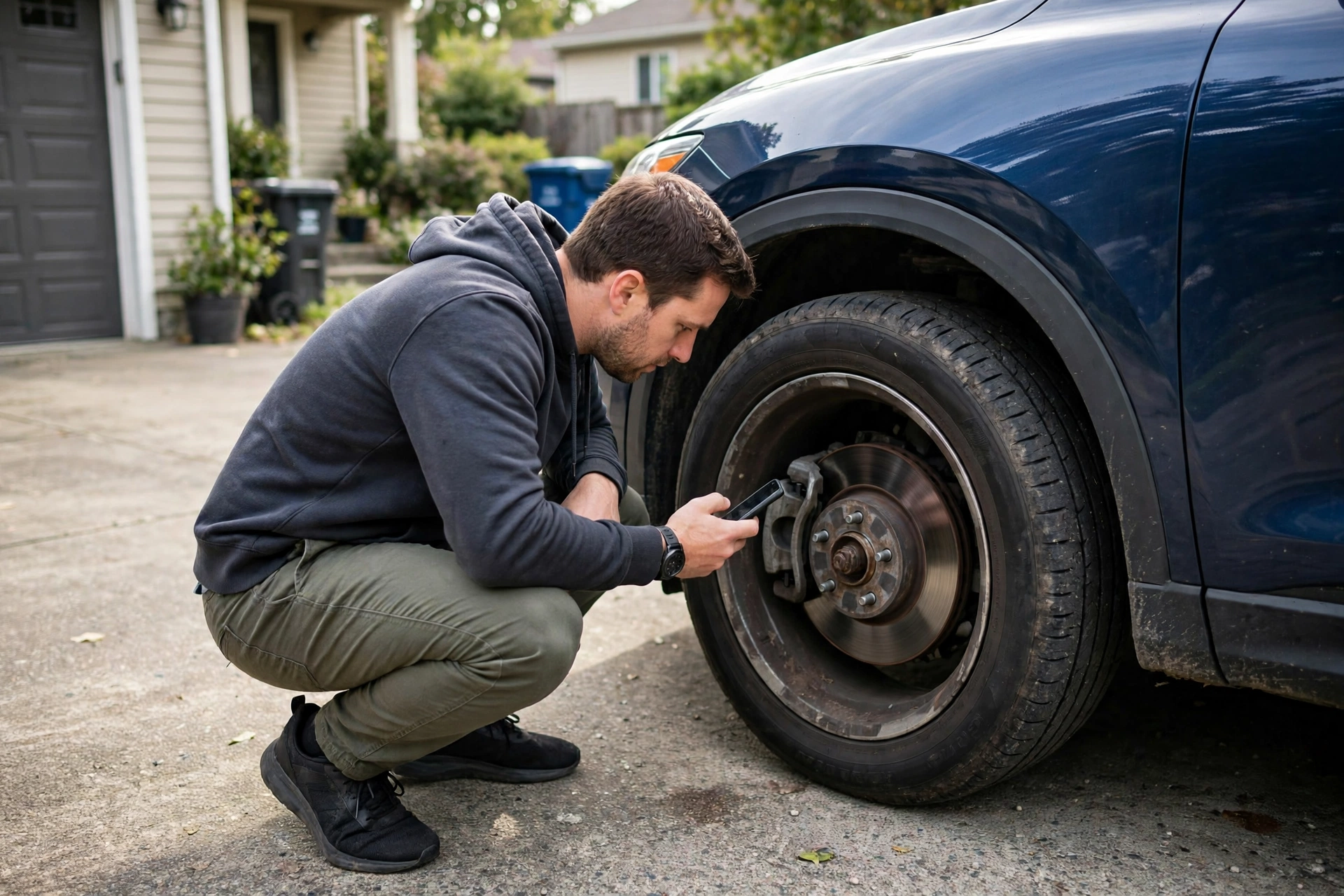
Then the driveway look that costs nothing: through the wheel spokes, or with the wheel off if you are equipped for it, compare pad thickness side to side. One thin pad confirms the ranking and tells the shop where to start; even pads with one-sided noise moves the caliper up the list. Either way you arrive with a specific question instead of "it makes a noise" — and a specific question gets you a pads quote instead of an open-ended inspection bill. For reference, RepairPal puts check-engine diagnosis and testing at $125–$183 on average.
Who this check is for — and who should skip it
This guide is for drivers with a firm pedal, no warning light, and a car that still stops straight, who want to arrive at the shop knowing which corner and which part to ask about — and for the home mechanic deciding whether this is a Saturday pads job or something deeper.
Skip it and call for a tow if the pedal is soft or sinking, a red brake warning light is on, stopping distance has grown, or the car pulls hard under braking. No article and no phone diagnosis can certify brakes are safe — when the stop itself feels wrong, "probably pads" is not good enough.
Frequently asked questions
Can I drive with a grinding noise when braking?
Only in the narrow case: firm pedal, no warning light, normal stopping, and a short trip to get it inspected. Grinding means pad material is likely gone and the rotor is being damaged, so every mile adds cost — and any change in pedal feel or stopping ends the driving, full stop.
What is the difference between squealing and grinding?
Squealing is usually the early warning — the wear tab touching the rotor while pad material remains, or light surface rust. Grinding is later and rougher: metal on metal. Squealing buys you time to schedule; grinding means schedule now.
Will new pads fix the grinding?
If worn pads are the cause and the rotors are still smooth and within thickness, yes. If the grinding has scored the rotors, pads alone will not restore quiet, full braking — the shop should show you the rotor surface and explain which case yours is before quoting.
Why does the noise come from only one wheel?
One-sided grinding usually means one corner wore first — a sticking caliper or slide pin on that side is a common reason. Ask for that corner's caliper and hardware to be checked, not just pads swapped across the axle.
How much does it cost to check first with AI Mechanic?
Your first diagnosis is free with no account. A free account includes 200 tokens a month (about 40 text questions or about 13 photo or sound analyses). Paid plans on the pricing page are DIY at $4.99/month and Mechanic at $14.99/month, each with a 7-day free trial that requires a card.
Get the causes ranked before you book the shop
Describe the noise — when it happens, which corner, how the pedal feels — and get the likely causes ranked before anyone quotes you parts. Start with your 1 free diagnosis, no account needed, and if you want to record the sound itself, a free account adds recordings within its 200 monthly tokens.
