P0420 Catalytic Converter or Oxygen Sensor: Which First?
The scanner says P0420, and the first quote you hear is for a new catalytic converter — four figures. That is exactly the P0420 catalytic converter or oxygen sensor decision this guide slows down: the converter is the most common cause, and still the last part you should pay for. AI Mechanic ranks the causes for P0420 and puts a cheaper test first; here is that order, and what each step should cost.
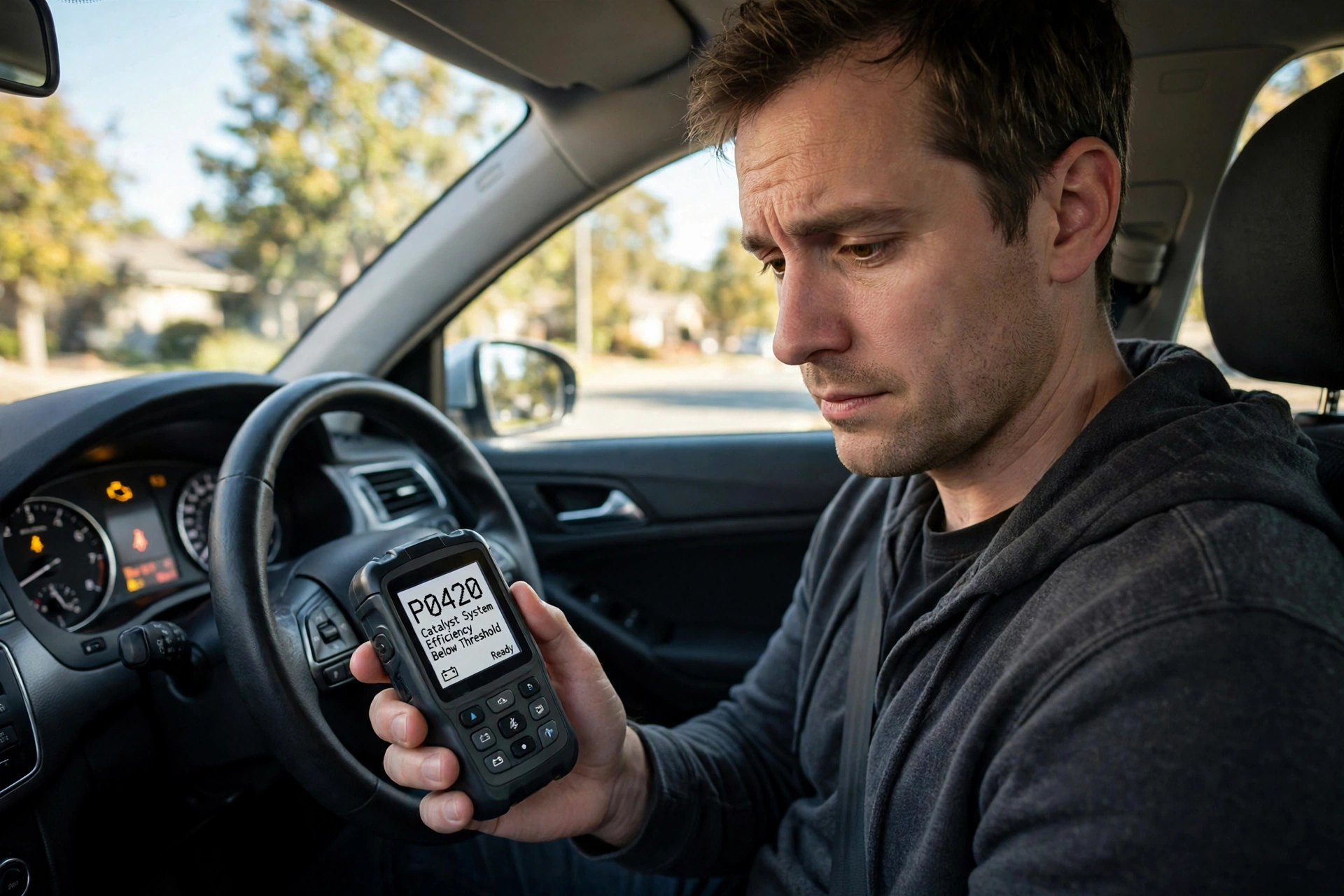
What P0420 actually means
P0420 means catalyst system efficiency below threshold, bank 1. In plain terms, your catalytic converter is not cleaning exhaust gases as well as it should: the downstream oxygen sensor sees too little difference from the upstream one. The P0420 code page calls it one of the most common codes on cars over 100,000 miles.
The good news is built into the code page too: this one is safe to drive — it will not strand you, so get it checked when convenient. Do not stretch that into months, though. A failing converter can clog, hurting performance and fuel economy, and the car will fail an emissions test while the code is stored. That is why you can test in order first.
P0420 catalytic converter or oxygen sensor — which to test first
The causes AI Mechanic ranks for P0420, in the site's order, are:
1. A worn-out catalytic converter. Converters degrade with age and mileage, and this is the most common root cause. Past 100,000 miles, if everything else checks out, this is where the evidence usually lands.
2. A failing downstream oxygen sensor. A lazy sensor can falsely report low efficiency — and the code page says to always rule this out first. The most likely cause and the first check are not the same thing.
3. An exhaust leak upstream of the converter. Extra oxygen through a leak skews the sensor readings, so a healthy converter reads as tired.
4. An engine burning oil or running rich. Both contaminate the catalyst over time. Replace a converter without fixing this and the new part gets poisoned the same way.
5. Misfires dumping fuel into the exhaust. Unburned fuel overheats the converter and can melt the material inside it. If a misfire code is stored alongside P0420, fix the misfire first — no exceptions.
Now the money, because the order above is really a price order. A typical P0420 repair runs $440–$2,500 overall. Oxygen sensor replacement typically runs $440–$523; catalytic converter replacement typically runs $1,000–$2,500. Those are the RepairPal national estimates on the code page; they vary by vehicle, location, and shop. Test the sensor and look for a leak first, and you may be done at the low end. Skip the tests, and you have paid converter money on a guess — always diagnose before replacing the converter, because it is the most expensive guess on the list.
How AI Mechanic works when you enter P0420
You do not need to walk into a shop to get the ranking. On the diagnose page, add your vehicle, then enter the code P0420 by hand — or describe the situation in plain words if all you have is the light and a deadline. With a free account you can also attach a photo, and you can describe a noise in text; recording-based sound diagnosis is not currently available.
What comes back is the causes ranked for your vehicle, the evidence for each, how urgent it looks, the first confirmation checks, estimated repair costs, and a do-it-yourself versus shop comparison. For P0420 the converter may top the likelihood list while the sensor test still tops the to-do list — keeping those two separate is what saves the money.
A shop diagnosis alone can cost $100 or more — RepairPal puts check-engine diagnosis and testing at $125–$183 on average. The first read here is free: 1 free diagnosis with no account needed, and with a free account the free plan includes 200 tokens each month, about 40 text questions or about 13 photo analyses, with no card required.
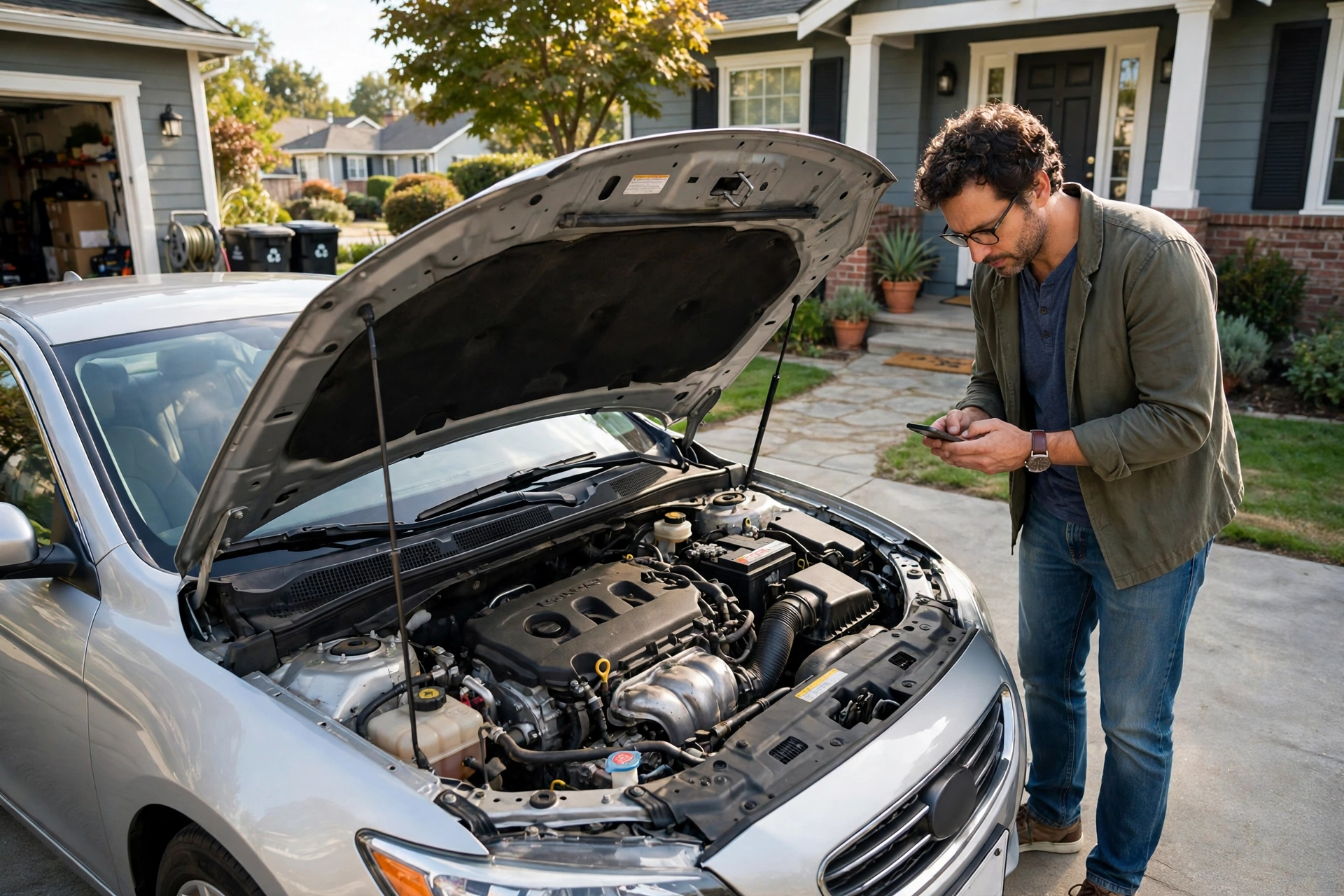
Example: a converter quote, checked in order
Here is a worked example — an illustration, not a real customer case.
Imagine a driver whose sedan, well past 100,000 miles, stores P0420 weeks before its emissions test. A shop quotes a catalytic converter in the $1,000–$2,500 range the code page publishes. Before approving anything, she enters P0420 in AI Mechanic. The result ranks a worn converter as most likely — the mileage fits — but puts the downstream oxygen sensor check first, with the ranges side by side: sensor typically $440–$523, converter typically $1,000–$2,500.
At the shop, her request changes. She no longer asks for "a new converter." She asks for the downstream sensor tested and the exhaust checked for leaks upstream of the converter before any part is ordered. In this example the sensor turns out to be the lazy one, so she pays the sensor bill once, clears the code, and drives until the car reports itself ready for the emissions appointment. If the sensor had tested good, the converter quote would still be there — backed by evidence, not a guess.
Who this is for — and who it is not for
This is for owners staring at a P0420 code and a converter quote who want the causes ranked and the cheap checks done first — especially anyone past 100,000 miles or facing an emissions test.
It is not for a car that is unsafe to drive. P0420 on its own is safe to drive, but a flashing check engine light, overheating, heavy smoke, or a sudden loss of power is different: stop and have the vehicle inspected in person. Nor is this a substitute for a qualified mechanic's inspection — the site says its outputs are informational, and a hands-on sensor test has the deciding vote.
Frequently asked questions
Is P0420 serious, and can I keep driving with it?
You can keep driving — the code page rates it safe to drive, checked when convenient. Do not ignore it for months: a failing converter can clog, hurting performance and fuel economy, and you will fail emissions testing.
How much does it cost to fix P0420?
Typically $440–$2,500, per the RepairPal national estimates on the code page. Oxygen sensor replacement typically runs $440–$523; catalytic converter replacement typically runs $1,000–$2,500. Which bill you get depends on which cause the checks confirm — estimates vary by vehicle, location, and shop.
Can a bad oxygen sensor cause P0420 if the converter is fine?
Yes. A lazy downstream sensor can falsely report low efficiency, which is why the code page says to always rule the sensor out first — a sensor test costs far less than a converter.
Should I just clear the code before an emissions test?
Clearing the code does not fix the cause, and it returns once the car runs its checks again — usually before you reach the testing station. Fix the confirmed cause first, then drive until the car is ready.
What does AI Mechanic cost to try?
The first diagnosis is free with no account needed. The free plan includes 200 tokens each month — about 40 text questions or about 13 photo analyses — with no card required. Paid plans are DIY at $4.99 a month and Mechanic at $14.99 a month, starting with a 7-day free trial — card required, no charge until day 7. Full details are on the pricing page.
Get the test order right before you approve the big part
P0420 names a system, not a part. The converter is the most common cause and the most expensive guess, so it belongs at the end of the check order, not the start. Test the sensor, look for the leak, rule out the engine causes — then spend once, on the part the evidence points to.
Start free on the diagnose page: 1 free diagnosis, no account needed. Keeping the car long-term? Compare the free plan against DIY and Mechanic on pricing.