How Much Does a Car Diagnostic Cost? What the Fee Covers
The light comes on Tuesday. On Wednesday you are standing at a service counter being told the car needs a diagnostic before anyone can quote the repair — and the diagnostic itself has a price. So how much does a car diagnostic cost, and what are you actually buying with it? RepairPal puts check-engine diagnosis and testing at $159–$234 on average — so a shop diagnosis can cost $100 or more, before a single part is ordered. This guide breaks down what that fee covers, what it leaves out, and how to get a first read before you pay it.
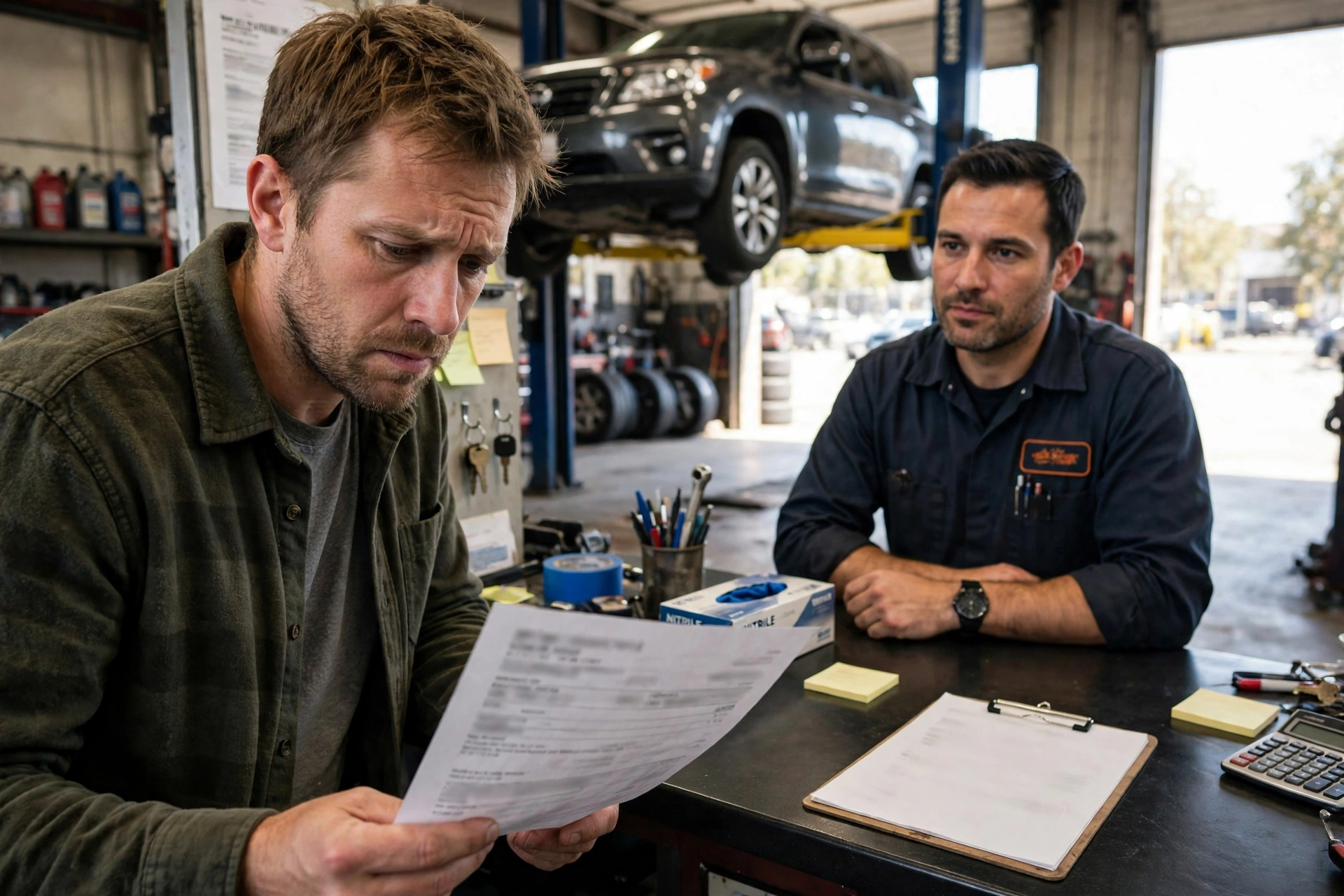
What the diagnostic fee actually pays for
A real diagnostic is not the same thing as reading a code. A code read takes minutes: a scanner reports what the engine computer stored, such as P0420 or P0300. That tells you which system flagged a fault — not which part failed, or why.
The fee pays for the work after the code: a technician's time to test the parts the code points at, confirm which one is at fault, and rule out the look-alikes. That confirmation step is the difference between replacing the right part once and replacing parts until the light stays off.
Ask two questions before you approve it. First: what tests are included — a code read, or a full check of the likely causes? Second: does any of the fee apply toward the repair if you have the work done there? Shops set that policy themselves, so get the answer stated up front.
What the diagnostic fee does not cover
The diagnostic fee is the cost of finding out. It is not the repair — parts and labor come on top, and that is where the spread gets wide.
Take P0420, the catalytic converter efficiency code. AI Mechanic lists its typical repair cost at $200–$2,500: an oxygen sensor replacement typically runs $200–$400, while a catalytic converter replacement typically runs $1,000–$2,500. Same code, same diagnostic fee — a repair bill at either end of that range depending on which part failed. That is why the site's own guidance on P0420 is to diagnose before replacing the converter: it is the most expensive guess on the list.
Misfire codes show the same pattern: a P0300 repair typically runs $100–$600, with spark plugs typically $100–$300 and coils typically $150–$400. The diagnostic fee is the small, predictable number. The repair is the variable one — and the quality of the diagnosis decides whether you pay it once or twice.
How much does a car diagnostic cost if you get the first read first?
There is a step that costs nothing, and it belongs before the counter. AI Mechanic gives you 1 free diagnosis with no account needed. With a free account, the free plan includes 200 tokens each month — about 40 text questions or about 13 photo analyses — with no card required. Tokens reset every 30 days and do not roll over; NHTSA VIN specifications and model-level recall checks do not use tokens on any plan.
Here is how it works on the diagnose page. Add your vehicle, then describe the symptom in plain words, describe a noise in text including when it happens, attach a photo of the part, leak, or dash light with a free account, or enter an OBD-II code by hand. Recording-based sound diagnosis is not currently available — noises are described in words.
What comes back is a first read, not a guess: likely causes ranked in order, the evidence for each, how urgent it looks, the confirmation checks that usually come first, estimated repair costs, and a do-it-yourself versus shop cost comparison. Follow-ups stay tied to your saved vehicle, and diagnoses, service history, and maintenance tracking live in the Digital Garage.
That first read does not replace the shop's hands-on tests. What it replaces is walking in blind: you arrive knowing the code in plain English, the causes in order, and which confirmation test to ask for by name. If the light is flashing rather than steady, read our guide on whether you can still drive with a flashing check engine light before you go anywhere.
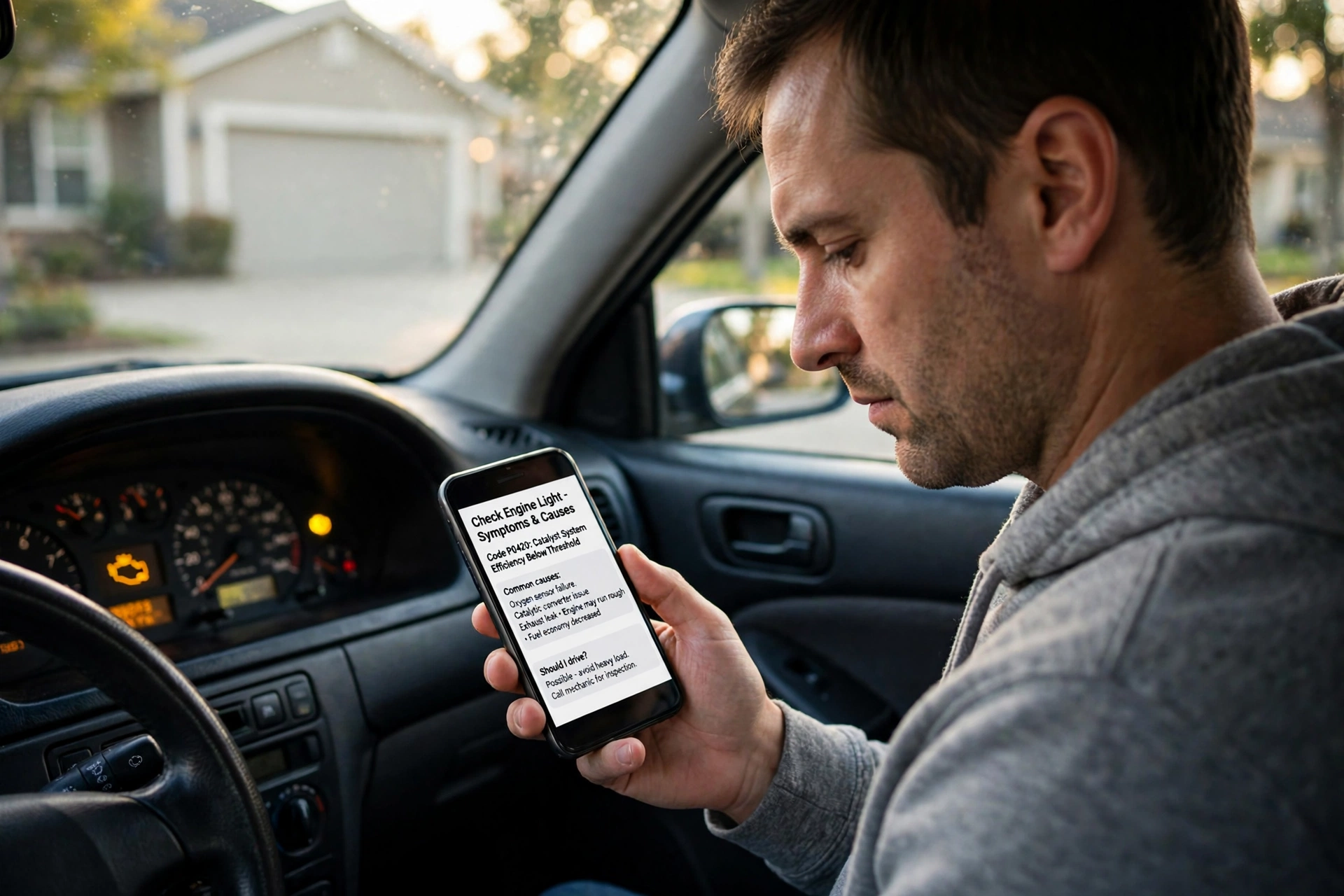
Example: a P0420 owner spends the fee in the right order
Here is a worked example — an illustration, not a real customer case.
Imagine an owner whose check engine light comes on steady, with no change in how the car drives. A parts store reads the code: P0420. The expensive interpretation is immediate — new catalytic converter. Instead, she enters P0420 in AI Mechanic for her specific engine and gets the causes ranked: a worn-out converter first, but a failing downstream oxygen sensor second — a lazy sensor can falsely report low efficiency and should be ruled out first.
At the shop, she does not ask for a converter quote. She asks for the diagnostic, and specifically for the downstream sensor to be tested before anyone prices the converter. If the sensor is the fault, the published range is $200–$400. If the tests clear the sensor and the converter has failed, she pays the larger bill knowing it was confirmed, not guessed.
Who this is for — and who it is not for
This is for owners who want to understand a symptom, a photo, a described noise, or a code before they spend money — and for anyone deciding whether a shop diagnostic is worth approving today. It also suits owners who keep records: saved vehicles, repair history, and upcoming maintenance stay in one place.
It is not for a car that is unsafe to drive — smoking, leaking fuel, overheating, or any loss of braking or steering. Stop and get the vehicle inspected in person. And it is not a substitute for a qualified mechanic's inspection: the site says its outputs are informational, and a hands-on test has the final word on which part gets replaced.
Frequently asked questions
Is the diagnostic fee separate from the repair cost?
Yes. AI Mechanic puts a shop diagnosis at $100 or more (RepairPal puts check-engine diagnosis and testing at $159–$234 on average), and that covers finding the fault. The repair — parts and labor — is quoted separately once the cause is confirmed. Ask whether any of the fee applies toward the repair before you approve the work.
Why not just use a free code read and skip the diagnostic?
A code read names the system, not the failed part. P0420 alone cannot tell you whether the converter, a sensor, or a leak is responsible — and the repair range for that one code runs from $200 to $2,500. The diagnostic is the testing that narrows it down.
How much does AI Mechanic itself cost?
The first diagnosis is free with no account needed. The free plan includes 200 tokens each month — about 40 text questions or about 13 photo analyses — with no card required. Paid plans are DIY at $4.99 a month (1,200 tokens, 5 saved vehicles) and Mechanic at $14.99 a month (4,000 tokens, unlimited saved vehicles). Paid web plans start with a 7-day free trial — card required, no charge until day 7, cancel in Account before day 7 to pay nothing. Full details are on the pricing page.
Does a first read replace a shop diagnostic?
No. It ranks the likely causes and names the confirmation checks that usually come first, so you can judge a shop's findings and quote. The physical tests — and the final call on safety — still belong to a qualified mechanic.
My light is on but the car drives fine. Can I wait?
A steady light with no change in drivability usually means get the code read promptly rather than pull over — but promptly still means soon, because a fault left running can damage other parts. Start with the free first read and let the ranked causes and urgency guide your timing.
Get the first read before you pay for the diagnostic
You do not have to approve a $100-or-more diagnostic fee knowing only a code number. Get the symptom or code explained first — causes ranked, costs estimated, checks named — then decide what the shop should test.
Start free on the diagnose page: 1 free diagnosis, no account needed. Keeping the car long-term? Compare the free plan against DIY and Mechanic on pricing.